July 17 Trivia, Fun Facts and Pop Culture History
July 17 Observances
July 17 is World Emoji Day, National Tattoo Day, National Peach Ice Cream Day, Wrong-Way Corrigan Day, Yellow Pigs Day, and World Day for International Justice, which marks the anniversary of the Rome Statute establishing the International Criminal Court in 1998. World Emoji Day is observed on July 17 because that is the date displayed on the calendar emoji on Apple devices, chosen because Apple held an event on July 17, 2002. The entire holiday is essentially a tribute to a design decision made by an Apple graphic designer more than two decades ago.
World Emoji Day: A Brief History of the Smiley
The digital emoticon as we know it was first documented on September 19, 1982, when Carnegie Mellon computer scientist Scott Fahlman posted 🙂 to a university bulletin board to indicate that a message was a joke. Fahlman has said he has never seen hard evidence that the sequence was in use before his post, though he acknowledges someone else could have had the same idea independently. It is, as he noted, a simple and obvious idea. The question is why it took so long. Typewriters existed for over 100 years without anyone widely adopting typed emoticons, likely because most typewriter use was professional and formal. Early computer culture was casual and playful by comparison, and the emoticon filled a gap that professional correspondence had never needed to fill.
The basic smiley face as a graphic symbol was created in 1963 by commercial artist Harvey Ball, hired by State Mutual Life Assurance Company to boost employee morale. He was paid $45. He never trademarked it. The image went on to generate hundreds of millions of dollars in merchandise sales for other people.
Japan developed its own emoticon tradition independently, producing kaomoji, which are read straight on rather than sideways. Where the Western 🙂 requires you to tilt your head, the Eastern version (^_^) faces you directly. Both traditions eventually fed into the emoji system developed by Japanese telecom companies in the late 1990s, which Apple adopted for its iPhone keyboard in 2011 and which now contains over 3,600 individual characters.
The poop emoji was originally designed as soft-serve chocolate ice cream. This did not go as planned.
Trivia: World Emoji Day is July 17 because that is the date shown on the 📅 calendar emoji as displayed on Apple devices. Google’s calendar emoji showed July 17 for a different reason. Microsoft’s originally showed a different date entirely. The holiday exists because designers made different choices and one of them happened to land on a Sunday in July.
What Happened on July 17?
July 17 is the day Tsar Nicholas II and his family were executed, the day Disneyland opened to the press, the day Wrong-Way Corrigan flew to Ireland by “accident,” the day the Hyatt Regency walkway collapsed in Kansas City, the day the national drinking age became 21, the day the B-2 Stealth Bomber flew for the first time, and the day Malaysia Airlines Flight 17 was shot down over Ukraine. It is also the birthday of James Cagney, Donald Sutherland, Angela Merkel, and the guy who made “Sandstorm.”
If you were born on July 17, you were likely conceived the week of October 24 of the prior year.
July 17 History Highlights
1429 — Charles VII of France was crowned King at Reims Cathedral following Joan of Arc’s military campaign that reversed English advances in the Hundred Years’ War. Joan was present at the coronation she had made possible. She was captured by the Burgundians eight months later, sold to the English, tried for heresy, and burned at the stake in 1431 at the age of approximately 19. Charles VII made no serious effort to ransom or rescue her. He later authorized a retrial that posthumously cleared her name in 1456. She was canonized in 1920.
1918 — Tsar Nicholas II of Russia, his wife Alexandra, their five children, the family physician, and three servants were executed by Bolshevik secret police in the basement of the Ipatiev House in Yekaterinburg. The family had been held under house arrest since the February Revolution of 1917. The bodies were buried in secret. Their remains were not officially identified until DNA testing in the 1990s. Nicholas was the last Emperor of Russia. The Romanov dynasty had ruled for 304 years.
1938 — Douglas Corrigan took off from Floyd Bennett Field in Brooklyn, ostensibly bound for California. He landed 28 hours later in Dublin, Ireland, claiming his compass had malfunctioned and he had flown the wrong way in the clouds. Aviation authorities had already denied his request to fly transatlantic because his plane was considered unairworthy for the crossing. Nobody fully believed his story. Nobody could prove otherwise. He was given a ticker-tape parade in New York, became famous, and never contradicted his official account. He died in 1995 at age 88, still maintaining it was an honest mistake.
1955 — Disneyland was dedicated at a press preview event in Anaheim, California, hosted by Walt Disney and broadcast live on ABC television. The public opening was July 18. The opening day press preview was famously chaotic: counterfeit tickets flooded the park, the crowds far exceeded capacity, a gas leak shut down Fantasyland, women’s high heels sank into freshly laid asphalt, and the Mark Twain Riverboat nearly capsized from overloading. Disney privately called it Black Sunday. The park has since welcomed over 800 million visitors and remains the most visited theme park on Earth.
1975 — The U.S. Apollo spacecraft and Soviet Soyuz spacecraft docked in orbit in the first international human spaceflight, known as the Apollo-Soyuz Test Project. American astronaut Thomas Stafford and Soviet cosmonaut Alexei Leonov shook hands through the docking tunnel while orbiting Earth, a moment broadcast worldwide. The mission was as much diplomatic theater as science, conducted during the brief period of U.S.-Soviet detente in the mid-1970s.
1981 — Two suspended walkways at the Hyatt Regency Hotel in Kansas City collapsed during a crowded tea dance, killing 114 people and injuring more than 200. It remains the deadliest structural failure in U.S. building history. A last-minute design change during construction had doubled the load on a critical connection rod. The engineers responsible lost their professional licenses. The disaster led to significant changes in engineering review standards nationwide.
1984 — President Ronald Reagan signed the National Minimum Drinking Age Act, effectively raising the drinking age to 21 in all states by threatening to withhold federal highway funding from any state that did not comply. Prior to the law, states set their own drinking ages, most at 18 or 19. The United States now has one of the highest minimum drinking ages in the world. The debate about whether this was the right policy has never fully ended.
1989 — The Northrop B-2 Spirit Stealth Bomber made its first flight over Palmdale, California. The B-2 uses a flying wing design with radar-absorbing materials that make it nearly invisible to radar. Each aircraft costs approximately $2.1 billion, making it the most expensive military aircraft ever built. The Air Force operates 20 of them, all based at Whiteman Air Force Base in Missouri.
2014 — Malaysia Airlines Flight 17, a Boeing 777 en route from Amsterdam to Kuala Lumpur, was shot down over eastern Ukraine, killing all 298 people on board. The Dutch Safety Board and the international Joint Investigation Team concluded the aircraft was struck by a Buk surface-to-air missile fired from territory controlled by Russian-backed separatists. Russia has denied involvement. The investigation identified specific Russian military unit 53rd Anti-Aircraft Missile Brigade as responsible. No criminal convictions have been obtained as of 2024.
Billboard Number One on July 17
- 1999: “Bills, Bills, Bills” — Destiny’s Child (No. 1: July 17-23, 1999). The group’s first No. 1 hit. The lineup at the time included Beyonce Knowles, Kelly Rowland, LeToya Luckett, and LaTavia Roberson. Luckett and Roberson were replaced in early 2000, a transition that became one of the more publicly turbulent lineup changes in pop history. Beyonce has done reasonably well since.
Born on July 17
- Isaac Watts (1674-1748) — English minister and hymn writer credited with writing over 750 hymns, including “O God, Our Help in Ages Past” and “Joy to the World.” He is sometimes called the Father of English Hymnody. He also wrote educational texts for children and philosophical works. His advice to “acquaint yourself with your own ignorance” remains underutilized.
- John Jacob Astor (1763-1848) — German-born American businessman and the first multi-millionaire in U.S. history, whose fortune was built on the fur trade and Manhattan real estate. At his death he was the wealthiest person in America. His great-grandson John Jacob Astor IV, who appeared in our July 13 entry, died on the Titanic. The family had a talent for ending up at significant historical events.
- James Cagney (1899-1986) — American actor whose rat-a-tat delivery and physical intensity defined the gangster film genre in the 1930s. He won the Academy Award for Best Actor for Yankee Doodle Dandy (1942), a musical role that surprised audiences who knew him from The Public Enemy (1931) and White Heat (1949). He retired in 1961 and did not make another film for 20 years. His advice to look the other fellow in the eye and tell the truth was apparently non-negotiable.
- Art Linkletter (1912-2010) — Canadian-American radio and television host best known for Kids Say the Darndest Things, a segment that ran for years and was revived multiple times. He lived to 97, active and working into his late 90s. He advocated for healthy aging and was one of the first public figures to speak openly about the dangers of drug use after his daughter Diane died in 1969 following an LSD-related incident.
- Phyllis Diller (1917-2012) — American stand-up comedian who became one of the first women to achieve major success in stand-up comedy, breaking into a field almost exclusively dominated by men in the 1950s. Her self-deprecating humor about her appearance and her fictional husband “Fang” made her one of the most recognized comedians of her era. She did not begin performing stand-up until age 37. She was still performing at 88.
- Vince Guaraldi (1928-1976) — American jazz pianist and composer best known for writing the music for A Charlie Brown Christmas (1965) and all subsequent Peanuts television specials. His “Linus and Lucy” theme is one of the most immediately recognizable pieces of music in American popular culture. He died of a heart attack at age 47, backstage between sets at a California club. The Peanuts special he scored is the longest-running animated Christmas special in television history.
- Diahann Carroll (1935-2019) — American actress and singer who in 1968 became the first Black woman to star in a non-servant role in a dramatic TV series, playing nurse Julia Baker in Julia on NBC. She was nominated for an Academy Award for Claudine (1974) and won a Tony Award for No Strings (1962). She later played Alexis Colby’s rival Dominique Deveraux on Dynasty, which she described as the most fun she ever had on a set.
- Donald Sutherland (1935-2024) — Canadian actor with one of the most varied careers in film history, spanning M*A*S*H (1970), Klute (1971), Ordinary People (1980), JFK (1991), and The Hunger Games series. He received an honorary Academy Award in 2017 after never being nominated for a competitive Oscar despite a career of consistent excellence. He passed away in June 2024 at age 88. He was, as he said, from Nova Scotia, and he never quite lost the quality of someone slightly amazed by where he ended up.
- Geezer Butler (1949) — English bassist and primary lyricist for Black Sabbath, one of the most influential bands in rock history. Butler wrote the lyrics to “Iron Man,” “War Pigs,” “Paranoid,” and most of the band’s catalog. His bass line on “N.I.B.” is considered one of the most recognizable in heavy metal. He is a committed vegan and animal rights advocate, which is not what most people expect when they hear “Black Sabbath bassist.”
- Angela Merkel (1954) — German politician and Chancellor of Germany from 2005 to 2021, the longest-serving head of government in the European Union during her tenure. Before entering politics, she earned a doctorate in quantum chemistry from the Academy of Sciences in East Berlin. She is widely regarded as one of the most consequential political leaders of the early 21st century. She has given no significant interviews since leaving office and appears to be enjoying the quiet.
- Alex Winter (1965) — English-American actor best known as Bill S. Preston, Esquire in Bill and Ted’s Excellent Adventure (1989) and its sequels. Less widely known: he has had a substantial career as a documentary filmmaker, directing films about Napster, the dark web, and Frank Zappa. He went to NYU Film School while Keanu Reeves was becoming a movie star, which required a certain self-possession.
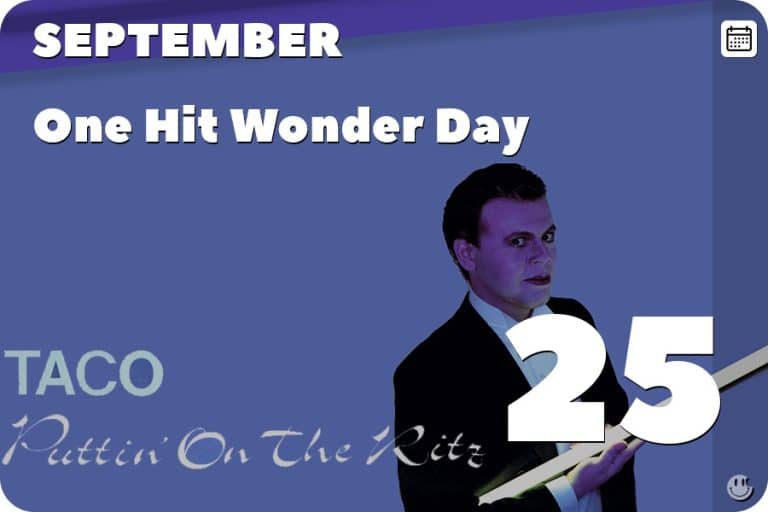
- Darude (1975) — Finnish DJ and producer born Ville Virtanen, best known for “Sandstorm” (1999), which became one of the most recognized electronic music tracks in history and a universal internet meme. When asked to identify any piece of music online, “Sandstorm” is the default answer regardless of context. He has released other music. It does not matter.
- Luke Bryan (1976) — American country singer and one of the best-selling country artists of his generation, with multiple Diamond-certified albums. He has been a judge on American Idol since 2018. He has spoken openly about family tragedies including the deaths of his brother, sister, and brother-in-law, after which he and his wife took in his sister’s three children.
- Camilla, Queen Consort (1947) — British royal, wife of King Charles III, who ascended to the throne following the death of Queen Elizabeth II in September 2022. Camilla was formally given the title Queen Consort at the coronation in May 2023. Her journey from controversial figure to broadly accepted member of the royal family took approximately three decades and required considerable patience from everyone involved.
Birthday Quotes from July 17 Birthdays
“Find your mark, look the other fellow in the eye, and tell the truth.”
“If you’re not invited to the party, throw your own.”
“I come from Nova Scotia, and I’d never seen a theater or been inside of a theater. When I was 17, my dad asked me what I wanted to do, and I said I thought I would like to be an actor. I didn’t have any idea what it was to be an actor. None.”
“Do a little more than you’re paid to. Give a little more than you have to. Try a little harder than you want to. Aim a little higher than you think possible, and give a lot of thanks to God for health, family, and friends.”
“When you realize that life isn’t fair, you don’t act out, you don’t get overly wasted, you don’t get self-indulgent. You just move forward.”
“The problem with me is that nothing embarrasses me.”
“Acquaint yourself with your own ignorance.”
Random Trivia and Shower Thoughts for July 17
- The word “idea” has four letters and three syllables, giving it one of the highest syllable-to-letter ratios in common English use. “Area” matches it. Neither of them looks like it should be that much work to say.
- The Caspian Sea is technically the world’s largest lake, covering 143,000 square miles. It is called a sea because of its size, its saltiness, and because the countries surrounding it preferred the legal implications of “sea” for resource rights purposes. Geography and politics overlap more than the maps suggest.
- The letter on the face of a U.S. dollar bill indicates which Federal Reserve Bank printed it. A is Boston, B is New York, C is Philadelphia, D is Cleveland, E is Richmond, F is Atlanta, G is Chicago, H is St. Louis, I is Minneapolis, J is Kansas City, K is Dallas, and L is San Francisco.
- Cleopatra lived closer in time to the Moon landing than to the construction of the Great Pyramid. The pyramid was built around 2560 BC. Cleopatra was born around 69 BC, roughly 2,500 years later. The Moon landing was 1969 AD, about 2,000 years after Cleopatra. The pyramids are so old that ancient Egyptians considered them ancient.
- What was Captain Hook’s name before he got the hook? According to J.M. Barrie’s original text, his name was James Hook. His school was Eton. Peter Pan bit off his hand and threw it to the crocodile. These are canonical facts that do not make the story less strange.
- Violet Jessop was a British ocean liner stewardess and nurse who survived the collision of the RMS Olympic in 1911, the sinking of the RMS Titanic in 1912, and the sinking of the HMHS Britannic in 1916. All three ships were Olympic-class ocean liners. She continued working at sea after all three incidents. She lived to age 83 and died of congestive heart failure on land, in 1971.
- William Henry Harrison was the only U.S. President never to issue an executive order. He died of pneumonia 31 days into his term, on April 4, 1841, the shortest presidency in American history. His inaugural address was the longest in history at 8,445 words, delivered outdoors in cold, wet weather without a hat or coat. The connection between the speech and the illness is disputed by historians but remains irresistible as a story.
- Roger Vadim’s full birth name was Roger Vladimir Plemiannikov. He directed Barbarella (1968) and was at various times married to or partnered with Brigitte Bardot, Annette Stroyberg, Jane Fonda, and Catherine Deneuve. He had a remarkable life by any measure.
- “If you build it, he will come.” — The voice in Field of Dreams (1989). Ray Liotta played Shoeless Joe Jackson in the film. The actual quote from the film is “If you build it, he will come,” not “they will come,” though that version has entered common usage and is now more familiar than the original.
- Disneyland’s opening day press preview on July 17, 1955, was such a disaster that Walt Disney called it Black Sunday. Counterfeit tickets, overflowing crowds, sinking asphalt, a nearly capsized riverboat, and a gas leak in Fantasyland. It has since welcomed over 800 million visitors. Sometimes the opening act is the worst part.
- “Strange women lying in ponds distributing swords is no basis for a system of government.” — Dennis, Monty Python and the Holy Grail (1975). The full exchange that follows is arguably the most efficient critique of the divine right of kings ever committed to film.
- The Lion King is nominally about following your destiny and reclaiming your birthright. It is actually about how “Hakuna Matata,” as a life philosophy, is irresponsible avoidance behavior that allows injustice to flourish while you eat bugs in the jungle. Simba eventually figures this out. Timon and Pumbaa do not.