1940 Pop Culture Headlines

Top Events in January 1940 Pop Culture History
1. Britain Introduces Food Rationing (January 8, 1940): The United Kingdom began rationing bacon, butter, and sugar as its first wartime restrictions on the food supply, a system that would gradually expand to cover most staples and, remarkably, wouldn’t be fully lifted until 1954. Trivia: rationing was actually credited by many British nutritionists with improving the overall health of the working-class population during the war, since the strict, evenly distributed allotments ensured more consistent access to basic nutrition than many poorer households had experienced before the war.
2. Finland Wins a Stunning Victory at Suomussalmi (January 7-8, 1940): Vastly outnumbered Finnish troops, skilled at fighting on skis in brutal winter conditions, encircled and destroyed two Soviet divisions during the Winter War, one of the most lopsided tactical victories of the entire conflict. Trivia: the battle became a defining symbol of Finnish resistance, and Finnish ski troops in white camouflage using hit-and-run “motti” encirclement tactics against slower, road-bound Soviet columns are still studied in military academies today.
3. The Three Stooges Release “You Nazty Spy!” (January 19, 1940): This short comedy became one of the very first Hollywood productions to directly mock Adolf Hitler, with Moe Howard playing a bumbling dictator character named Moe Hailstone, released nearly a full year before Charlie Chaplin’s more famous satire of the same subject. Trivia: the short was made while the United States was still officially neutral, and the Stooges reportedly faced some pushback from Hollywood executives nervous about openly mocking a foreign head of state before America had entered the war.
4. The Grapes of Wrath Is Released (January 24, 1940): John Ford’s adaptation of John Steinbeck’s Depression-era novel, starring Henry Fonda as displaced Oklahoma farmer Tom Joad, became both a critical triumph and a rare mainstream Hollywood film willing to confront American poverty and labor exploitation head-on. Trivia: Steinbeck himself reportedly wept while watching an early screening of the film, saying Fonda’s performance had captured his lead character even more powerfully than he’d imagined while writing the novel.
5. The First Clear FM Radio Transmission (January 5, 1940): Inventor Edwin Armstrong’s frequency modulation broadcasting technology demonstrated a static-free radio signal, a genuine technical leap over the crackly, interference-prone AM broadcasts that had dominated radio up to that point. Trivia: Armstrong had spent years fighting an uphill battle against powerful radio industry interests invested in the existing AM broadcasting system, a conflict that would tragically continue to frustrate him for the rest of his life.
Top Events in February 1940 Pop Culture History
1. 12th Academy Awards (February 29, 1940): Gone with the Wind dominated the ceremony, winning eight competitive Oscars including Best Picture, and Hattie McDaniel made history by becoming the first Black performer ever to win an Academy Award, taking Best Supporting Actress for her role as Mammy. Trivia: McDaniel was still required to sit at a segregated table at the back of the venue during the ceremony itself, a stark and painful reminder of the very racial barriers her historic win was simultaneously breaking.
2. Disney’s Pinocchio Premieres (February 7, 1940): Walt Disney Studios’ second full-length animated feature, following the wooden puppet’s quest to become a real boy, opened to critical acclaim for its technical ambition, even though its box office initially suffered due to lost European markets already engulfed by the war. Trivia: the film’s song “When You Wish Upon a Star” went on to win the Academy Award for Best Original Song and later became so closely associated with the Disney company that it’s still used in the studio’s opening logo music today.
3. Carbon-14 Is Discovered (February 27, 1940): Scientists Martin Kamen and Sam Ruben at the University of California, Berkeley, discovered this radioactive isotope of carbon, a breakthrough that would eventually make possible the entire field of radiocarbon dating used by archaeologists and historians today. Trivia: radiocarbon dating, developed using this very discovery, wouldn’t actually be perfected as a practical dating technique for another decade, but it would go on to revolutionize how scientists determine the age of ancient artifacts and fossils.
4. Finland Begins Winter War Peace Negotiations (February 29, 1940): With Soviet forces finally breaking through Finland’s defensive lines after weeks of fierce resistance, the Finnish government opened peace talks with Moscow, a difficult acknowledgment that continued fighting alone was no longer sustainable. Trivia: Finland’s surprisingly effective resistance throughout the Winter War, despite this eventual peace settlement, is widely credited with exposing serious weaknesses in the Soviet military that German war planners took careful note of ahead of their own invasion of the USSR the following year.
5. Roosevelt Dispatches Sumner Welles on a European Peace Mission (February 1940): Undersecretary of State Sumner Welles traveled to Rome, Berlin, Paris, and London on behalf of President Roosevelt, probing whether any diplomatic path remained to avert a wider European war. Trivia: Welles’s mission ultimately found no realistic basis for peace among the major powers, and he returned home convinced that a much larger conflict was now essentially unavoidable.
Top Events in March 1940 Pop Culture History
1. Alfred Hitchcock’s Rebecca Is Released (March 1940): This atmospheric gothic mystery, adapted from Daphne du Maurier’s novel and starring Joan Fontaine and Laurence Olivier, became Hitchcock’s first American production and would go on to win Best Picture at the following year’s Academy Awards. Trivia: it remains, to this day, the only Best Picture winner in Hitchcock’s entire celebrated filmography, despite his status as one of the most influential directors in cinema history.
2. The Winter War Ends (March 12, 1940): Finland and the Soviet Union signed the Moscow Peace Treaty, formally ending the brutal three-and-a-half-month conflict, with Finland forced to cede roughly 11 percent of its prewar territory despite its surprisingly fierce resistance. Trivia: The harsh terms shocked much of the world, since Finland’s spirited defense had earned it enormous international sympathy, making the scale of the territorial concessions feel especially bitter to Finns watching the settlement unfold.
3. The First Telecast from an Airplane (March 6, 1940): An experimental broadcast transmitted live television footage from an aircraft over New York City, an early technical milestone in aviation and broadcasting that hinted at the future of airborne news and entertainment coverage. Trivia: Television itself was still such a novelty at this point that the vast majority of Americans had never even seen a broadcast, since regular commercial TV service in the U.S. wouldn’t formally launch for another year and a half.
4. The Katyn Massacre Order Is Signed (March 5, 1940): Soviet leader Joseph Stalin and the Politburo authorized the execution of nearly 22,000 Polish military officers, intellectuals, and civic leaders held in Soviet custody, a mass atrocity the USSR would spend decades falsely blaming on Nazi Germany after the killings were eventually discovered. Trivia: the Soviet Union didn’t formally acknowledge its own responsibility for the massacre until 1990, nearly half a century after the killings, when Mikhail Gorbachev’s government finally admitted the truth.
5. Germany Raids the British Fleet at Scapa Flow (March 16, 1940): Luftwaffe bombers struck this major Royal Navy anchorage in Scotland’s Orkney Islands, an early air assault that foreshadowed the far larger aerial campaigns Germany would soon launch against Britain itself. Trivia: this raid also resulted in the first British civilian killed by German bombing during the entire war, a grim milestone that underscored how directly the conflict was now reaching British soil.
Top Events in April 1940 Pop Culture History
1. Germany Invades Denmark and Norway (April 9, 1940): In Operation Weserübung, German forces launched a coordinated invasion of both Scandinavian countries, with Denmark surrendering within hours while Norway fought on for two more months before finally falling. Trivia: Denmark’s nearly instantaneous surrender, completed in under six hours, remains one of the shortest military campaigns of the entire war, a stark contrast to Norway’s far more prolonged and costly resistance.
2. Booker T. Washington Becomes the First Black American Honored on a U.S. Postage Stamp (April 7, 1940): The U.S. Postal Service issued a ten-cent stamp bearing Washington’s portrait, part of its “Famous Americans” series, marking a genuine milestone in official federal recognition of Black achievement. Trivia: It would take more than two decades after this stamp before the Postal Service issued another stamp specifically honoring a Black American, reflecting how slowly this kind of federal recognition progressed even after this initial breakthrough.
3. The Nazi Regime Orders the Construction of Auschwitz (April 27, 1940): SS chief Heinrich Himmler ordered the establishment of a new concentration camp near the Polish town of Oświęcim, a facility that would go on to become the single deadliest site of the Holocaust, ultimately responsible for the deaths of roughly 1.1 million people. Trivia: the camp was initially intended primarily to hold Polish political prisoners, and it was only later, following the notorious 1942 Wannsee Conference, that it was systematically expanded into the primary extermination site it’s now most remembered for.
4. The New York World’s Fair Announces Its Second Season (April 1940): Organizers confirmed the fair, themed around “The World of Tomorrow” and featuring futuristic exhibits from major American corporations, would reopen that May for a second year despite the deepening war in Europe casting a shadow over its optimistic vision. Trivia: several international pavilions from countries now occupied or at war, including Poland’s, remained open and staffed throughout the fair’s run specifically as a quiet gesture of solidarity, even after their home governments had already fallen.
5. King Haakon VII of Norway Refuses to Surrender (April 1940): As German forces overran Norway, King Haakon flatly rejected demands to legitimize a German-installed puppet government, instead leading a fighting retreat northward before eventually escaping into exile in Britain. Trivia: Haakon’s defiant refusal to capitulate became a powerful symbol of Norwegian national resistance throughout the entire German occupation, and his radio broadcasts from exile were secretly listened to by Norwegians at considerable personal risk for the rest of the war.
Top Events in May 1940 Pop Culture History
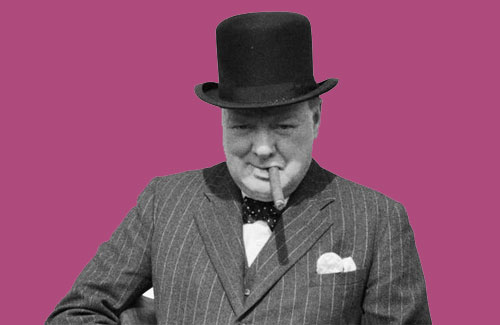
1. Winston Churchill Becomes Prime Minister (May 10, 1940): Churchill replaced the discredited Neville Chamberlain as Britain’s wartime leader on the very same day Germany launched its invasion of France and the Low Countries, immediately forming an all-party coalition government. Trivia: Churchill’s now-legendary “blood, toil, tears, and sweat” speech to the House of Commons came just three days later, an address that set the defiant tone for the rest of his wartime leadership.
2. Nylon Stockings Go on Sale (May 15, 1940): DuPont’s synthetic nylon stockings hit American store shelves for the first time nationwide, and demand was so overwhelming that an estimated four million pairs sold within just the first day alone. Trivia: Nylon production would soon be entirely redirected toward the war effort, making parachutes and other military supplies, creating such a severe stocking shortage that some women resorted to drawing fake seams on their bare legs with eyeliner to mimic the look.
3. The Netherlands Surrenders to Germany (May 14, 1940): Following the devastating bombing of Rotterdam, which killed hundreds of civilians and destroyed much of the city’s historic center, Dutch forces surrendered rather than risk similar destruction being visited on other Dutch cities. Trivia: Queen Wilhelmina had already fled to London the previous day, and her exiled government continued broadcasting messages of resistance to the occupied Netherlands throughout the remainder of the war.
4. The Dunkirk Evacuation Begins (May 26, 1940): Codenamed Operation Dynamo, this massive rescue effort began pulling Allied troops trapped against the English Channel by advancing German forces, ultimately saving more than 338,000 soldiers using a hastily assembled fleet of naval vessels and civilian “little ships.” Trivia: the evacuation’s success, while celebrated as a genuine morale-boosting “miracle” by the British press, still required troops to leave behind nearly all of their tanks, vehicles, and heavy equipment, a catastrophic material loss Churchill himself soberly acknowledged even while praising the rescue.
5. The Last Allied Troops Are Evacuated from Norway (May 2, 1940): British and French forces withdrew from Norway following the failure of the Allied campaign to prevent the country’s fall to Germany, a defeat that had already helped topple Neville Chamberlain’s government back in Britain. Trivia: this Norwegian campaign failure directly triggered the contentious “Norway Debate” in the House of Commons just days later, the parliamentary crisis that ultimately forced Chamberlain’s resignation and brought Churchill to power.
Top Events in June 1940 Pop Culture History
1. The Dunkirk Evacuation Concludes (June 4, 1940): The rescue operation officially ended after successfully evacuating more than 338,000 Allied soldiers, and Churchill marked the moment with his famous vow that Britain would “fight on the beaches… fight on the landing grounds… never surrender.” Trivia: Churchill deliberately cautioned the country in that same speech not to mistake the rescue for a genuine victory, reminding Parliament bluntly that “wars are not won by evacuations.”
2. Italy Declares War on France and Britain (June 10, 1940): Benito Mussolini brought Fascist Italy formally into the war on Germany’s side, opportunistically joining the conflict just as France’s defeat had already become all but certain. Trivia: Mussolini reportedly told his own military chief of staff at the time that he needed a few thousand Italian war dead simply to secure Italy a seat at the eventual peace conference table, a cynically transactional motive for entering the fight.
3. Paris Falls to Germany (June 14, 1940): German troops marched into the French capital largely unopposed, since French military and civilian leaders had already declared it an open city to spare it from destruction, a devastating symbolic blow to French morale. Trivia: the Nazi occupation force staged a deliberately theatrical victory parade down the Champs-Élysées, and German propaganda films of German soldiers posing for photographs in front of the Eiffel Tower became some of the most infamous images of the entire occupation.
4. Charles de Gaulle’s Appeal of June 18 (June 18, 1940): The little-known French general, having fled to London after France’s collapse, delivered a defiant radio broadcast urging the French people to continue resisting German occupation, effectively launching the Free French movement. Trivia: remarkably few people in France actually heard the original live broadcast, since most French radios weren’t tuned to the BBC that day, and the speech’s now-legendary status was built up gradually over the following months as its text was rebroadcast, reprinted, and quoted throughout the resistance.
5. France Signs an Armistice with Germany (June 22, 1940): French officials signed the surrender in the very same railway carriage used for Germany’s own humiliating 1918 armistice at the end of World War I, a deliberate and pointed choice by Hitler to invert the earlier German defeat. Trivia: Hitler reportedly insisted on the exact same railcar being hauled out of a French museum specifically for the ceremony, a calculated act of historical revenge nearly a quarter-century in the making.
Top Events in July 1940 Pop Culture History
1. The Battle of Britain Begins (July 10, 1940): Germany’s Luftwaffe launched its sustained aerial campaign against the United Kingdom, the first major military engagement in history fought almost entirely in the air, aiming to establish air superiority ahead of a planned invasion. Trivia: the Royal Air Force’s ultimate success in the battle is widely credited to Britain’s early and highly effective use of radar, giving RAF fighter squadrons crucial advance warning of incoming German raids that older air defense systems simply couldn’t match.
2. Vichy France Is Established (July 1940): Following the armistice with Germany, Marshal Philippe Pétain formed a new collaborationist French government based in the spa town of Vichy, governing the unoccupied southern portion of the country under terms largely dictated by Berlin. Trivia: Pétain, once a celebrated World War I hero at the Battle of Verdun, would later be tried and convicted of treason after the war for his government’s collaboration, a stunning fall for a man once regarded as a national savior.
3. Billboard Publishes Its First Singles Chart (July 20, 1940): The trade magazine debuted its earliest version of a national music popularity chart, with Tommy Dorsey’s “I’ll Never Smile Again” claiming the very first number-one position, an early forerunner of what would eventually evolve into the modern Billboard Hot 100 nearly two decades later. Trivia: the singer providing uncredited vocals on that very first chart-topping single was a young Frank Sinatra, still years away from launching his own headlining solo career.
4. Bugs Bunny Makes His Debut (July 27, 1940): The wisecracking rabbit officially debuted in the Warner Bros. animated short A Wild Hare, the first cartoon to feature his now-signature carrot-munching, “What’s up, Doc?” personality fully formed. Trivia: earlier prototype versions of the character had actually appeared in a couple of prior Warner Bros. shorts, but this particular cartoon is the one animation historians widely recognize as Bugs Bunny’s true, fully realized debut.
5. Roosevelt Signs the Havana Act, Reinforcing Hemispheric Defense (July 1940): The United States and other American republics agreed at a conference in Havana that no European colonial territory in the Western Hemisphere could be transferred to another hostile power, a policy specifically aimed at preventing Germany from seizing vulnerable colonial holdings like French or Dutch Caribbean islands. Trivia: this agreement reflected growing American anxiety that a defeated France or the Netherlands might be forced to hand over their remaining New World colonies to Nazi Germany as part of a future peace settlement.
Top Events in August 1940 Pop Culture History
1. Adlertag, or “Eagle Day” (August 13, 1940): The Luftwaffe launched a massive coordinated assault intended to cripple the Royal Air Force in a single decisive blow, opening the most intense phase of the Battle of Britain. Trivia: despite the operation’s ambitious name and scale, German intelligence significantly underestimated Britain’s actual fighter production capacity, meaning the RAF was able to replace its losses far faster than German planners had anticipated.
2. The Birmingham Blitz Begins (August 9, 1940): Sustained German bombing raids on Britain’s major industrial city of Birmingham began, targeting its extensive manufacturing base, part of the broader campaign of aerial attacks that would soon expand to strike London and other British cities directly. Trivia: Birmingham’s dense concentration of wartime factories, producing everything from aircraft parts to ammunition, made it one of the most heavily targeted British cities outside London for the remainder of the war.
3. “The Hardest Day” of the Battle of Britain (August 18, 1940): Both the Luftwaffe and RAF suffered their combined heaviest aircraft losses of the entire campaign in a single day of ferocious fighting, without either side achieving a decisive breakthrough. Trivia: military historians still debate exactly why this particular day proved so uniquely costly compared to the rest of the battle, though the sheer intensity and scale of that day’s coordinated German raids are generally cited as the primary factor.
4. Leon Trotsky Is Assassinated (August 20-21, 1940): The exiled Soviet revolutionary and rival of Joseph Stalin was fatally attacked with an ice axe by a Soviet agent posing as a sympathizer at his fortified compound in Mexico City, dying from his injuries the following day. Trivia: Trotsky had already survived a separate, failed machine-gun assault on his compound just months earlier, meaning this successful assassination came only after Stalin’s intelligence services had made multiple determined attempts to eliminate him.
5. Churchill Delivers His “Never Was So Much Owed” Speech (August 20, 1940): Addressing the House of Commons amid the ongoing Battle of Britain, Churchill famously praised the RAF’s fighter pilots, declaring that “never in the field of human conflict was so much owed by so many to so few.” Trivia: This line so thoroughly captured the public imagination that RAF fighter pilots of the Battle of Britain are still popularly and permanently remembered today simply as “The Few.”
Top Events in September 1940 Pop Culture History
1. The Blitz on London Begins (September 7, 1940): Some 300 German bombers launched the first of 57 consecutive nights of sustained bombing raids against London, shifting German strategy away from primarily targeting RAF airfields and toward directly terrorizing British civilians. Trivia: this strategic shift, while devastating for Londoners, is now widely regarded by historians as a significant tactical mistake, since it gave the RAF crucial breathing room to repair its damaged airfields just as the Luftwaffe was close to seriously degrading British fighter capability.
2. The United States Enacts Its First Peacetime Draft (September 16, 1940): President Roosevelt signed the Selective Training and Service Act, requiring men to register for possible military conscription even though the country remained officially at peace, a significant and controversial step toward eventual American involvement in the war. Trivia: This marked the first time in American history that the country had implemented a military draft outside of an active declared war, a genuinely unprecedented peacetime step that drew considerable political debate at the time.
3. Battle of Britain Day (September 15, 1940): The RAF decisively repelled two massive waves of daylight Luftwaffe raids against London, inflicting such heavy losses on the German air force that it’s now generally regarded as the campaign’s decisive turning point. Trivia: this single day’s outcome so thoroughly convinced Hitler that air superiority over Britain wasn’t achievable that he indefinitely postponed his planned invasion of Britain, Operation Sea Lion, just two days later.
4. The Destroyers-for-Bases Agreement (September 2, 1940): The United States transferred 50 aging naval destroyers to the Royal Navy in exchange for long-term leases on British military bases across the Western Hemisphere, a significant step toward American support for Britain despite the country’s continued official neutrality. Trivia: Roosevelt structured the deal as an executive agreement rather than a formal treaty requiring Senate ratification, a legally creative maneuver that allowed him to bypass strong isolationist opposition in Congress.
5. The Tripartite Pact Is Signed (September 27, 1940): Germany, Italy, and Japan formally allied themselves as the Axis powers, pledging mutual support and effectively dividing the world into their respective spheres of influence and conquest. Trivia: The pact’s provisions were specifically designed to deter the United States from entering the war by threatening a coordinated three-way response, a deterrent strategy that would ultimately fail entirely once Japan attacked Pearl Harbor the following year.
Top Events in October 1940 Pop Culture History
1. Charlie Chaplin’s The Great Dictator Premieres (October 15, 1940): Chaplin’s first full talking picture starred him in a dual role as both a persecuted Jewish barber and a thinly veiled parody of Adolf Hitler, culminating in a direct, impassioned plea for democracy and human decency delivered straight to the camera. Trivia: Chaplin later said that had he known the full, horrific extent of Nazi atrocities at the time of filming, he doubted he could have made the film’s satire as playful as he ultimately did, a rare admission of hindsight regret from the filmmaker.
2. Italy Invades Greece (October 28, 1940): Mussolini launched an unprovoked invasion from Italian-controlled Albania, expecting a swift victory, only for determined Greek forces to repel the attack and push the Italians back deep into Albanian territory. Trivia: This unexpected Italian setback proved so embarrassing to Hitler that Germany was ultimately forced to intervene directly in the Balkans the following spring just to rescue its struggling Axis partner, a diversion that some historians argue delayed and complicated Germany’s own planned invasion of the Soviet Union.
3. The First American Peacetime Draft Numbers Are Drawn (October 29, 1940): Secretary of War Henry Stimson, blindfolded, drew the first draft numbers from a large glass bowl in Washington, D.C., formally kicking off the selective service process authorized by that September’s new law. Trivia: the bowl used to draw the numbers had actually been recycled from the World War I-era draft lottery two decades earlier, a small but symbolically resonant detail linking the two eras of American conscription.
4. The Balham Tube Disaster (October 14, 1940): A German bomb struck London’s Balham Underground station, which was being used as an air-raid shelter, killing at least 66 people sheltering below and causing a devastating flood of water and sewage into the station tunnels. Trivia: the tragedy became one of the grimmest illustrations of the Blitz’s danger, even for civilians who believed they’d found relative safety underground, since the direct hit ruptured both water mains and sewer lines above the crowded shelter.
5. Hitler Meets with Francisco Franco at Hendaye (October 23, 1940): German and Spanish leaders met at the French-Spanish border hoping to bring officially neutral Spain into the war on the Axis side, though the negotiations ultimately failed after Franco demanded concessions Hitler was unwilling to grant. Trivia: Hitler later reportedly told an aide that he would rather have several teeth extracted than sit through another negotiating session with the notoriously stubborn and demanding Franco.
Top Events in November 1940 Pop Culture History
1. Franklin D. Roosevelt Wins an Unprecedented Third Term (November 5, 1940): Roosevelt defeated Republican challenger Wendell Willkie to become the only American president ever elected to a third term, breaking a two-term tradition that dated all the way back to George Washington. Trivia: Roosevelt’s decision to break the long-standing two-term precedent proved so controversial that it directly led to the ratification of the 22nd Amendment in 1951, which formally limited all future presidents to two elected terms.
2. Disney’s Fantasia Premieres (November 13, 1940): This ambitious animated feature paired classical orchestral music, conducted by Leopold Stokowski, with abstract and narrative visual sequences, a genuinely experimental fusion of high art and popular animation unlike anything Disney had attempted before. Trivia: the film was originally released with an early multi-channel surround sound system called “Fantasound,” an ambitious and expensive audio innovation that most theaters at the time simply weren’t equipped to install or play back properly.
3. The Coventry Blitz (November 14, 1940): German bombers devastated the English city of Coventry in one of the most concentrated and destructive single-night raids of the entire Blitz, destroying much of the city center, including its historic medieval cathedral. Trivia: the raid’s severity was so extreme that Germans reportedly coined a new verb, “coventrieren,” meaning to “Coventrate” or utterly flatten a target city, a grim linguistic legacy of the attack’s devastation.
4. The Tacoma Narrows Bridge Collapses (November 7, 1940): This brand-new Washington State suspension bridge, nicknamed “Galloping Gertie” for its unusual tendency to sway dramatically in the wind, twisted itself apart and collapsed into Puget Sound just months after opening, an engineering failure captured on now-famous newsreel footage. Trivia: the dramatic collapse footage is still shown today in engineering classrooms worldwide as a foundational case study in aerodynamic resonance and structural design, and remarkably, the only casualty of the entire collapse was a single unfortunate dog left in a stranded car.
5. The Warsaw Ghetto Is Sealed (November 16, 1940): Nazi occupation authorities enclosed the designated Jewish quarter of Warsaw behind walls, forcibly confining roughly 400,000 people into a small, overcrowded district as part of the broader machinery of the Holocaust. Trivia: the ghetto would go on to become the site of the 1943 Warsaw Ghetto Uprising, the largest single act of Jewish armed resistance against the Nazis during the entire war.
Top Events in December 1940 Pop Culture History
1. The Chicago Bears Rout the Washington Redskins 73-0 (December 8, 1940): This NFL Championship Game remains, to this day, the most lopsided victory in league history, a stunning blowout that came as a shock given the two teams’ closely fought regular-season meeting just weeks earlier. Trivia: the game was so overwhelmingly one-sided that officials reportedly ran out of footballs to throw into the stands for extra points, since so many kicks sailed clear out of the stadium that the team simply stopped attempting them and ran or passed for the final conversions instead.
2. Operation Compass Begins in North Africa (December 9, 1940): British forces launched a surprise offensive against numerically superior Italian forces in Egypt, achieving a stunningly successful counterattack that pushed Italian troops back hundreds of miles and captured tens of thousands of prisoners. Trivia: the offensive’s overwhelming success against Italy’s larger but poorly led army directly prompted Hitler to send German reinforcements to North Africa under a rising commander named Erwin Rommel, beginning the legendary desert campaign that would follow.
3. Captain America Comics #1 Hits Newsstands (December 1940): Timely Comics, the publisher that would eventually become Marvel Comics, released the debut issue featuring a cover of Captain America punching Adolf Hitler squarely in the jaw, a bold and immediately popular piece of wartime patriotic imagery. Trivia: the issue’s cover-dated month was actually March 1941, a common publishing practice of the era meant to keep comics looking current on newsstands for longer, even though the issue itself went on sale that December.
4. F. Scott Fitzgerald Dies (December 21, 1940): The celebrated author of The Great Gatsby died of a heart attack in Hollywood at age 44, his literary reputation still in something of a commercial decline at the time of his death, well before the major posthumous critical revival that would eventually cement his legacy decades later. Trivia: Fitzgerald spent his final years working as a Hollywood screenwriter to pay off debts, and he died still working on an unfinished novel, The Last Tycoon, which was published posthumously the following year.
5. Manuel Ávila Camacho Takes Office as President of Mexico (December 1, 1940): Camacho’s inauguration marked a notable political shift toward a more moderate governing approach after the more radical reforms of his predecessor, Lázaro Cárdenas, and he would go on to steer Mexico into closer wartime cooperation with the United States. Trivia: Camacho’s presidency would soon lead Mexico into World War II on the Allied side following German attacks on Mexican oil tankers, making Mexico one of only two Latin American nations to send combat forces overseas during the conflict.