1930 Trivia, Fun Facts, and Pop Culture History
Quick Facts from 1930
- World Changing Event: The Great Depression deepened. By 1930, unemployment had risen to 14.6% and was climbing. Banks were failing. Farms were failing. The stock market had lost 50% of its value since October 1929. Herbert Hoover told Americans it was a “passing incident.” It was not passing.
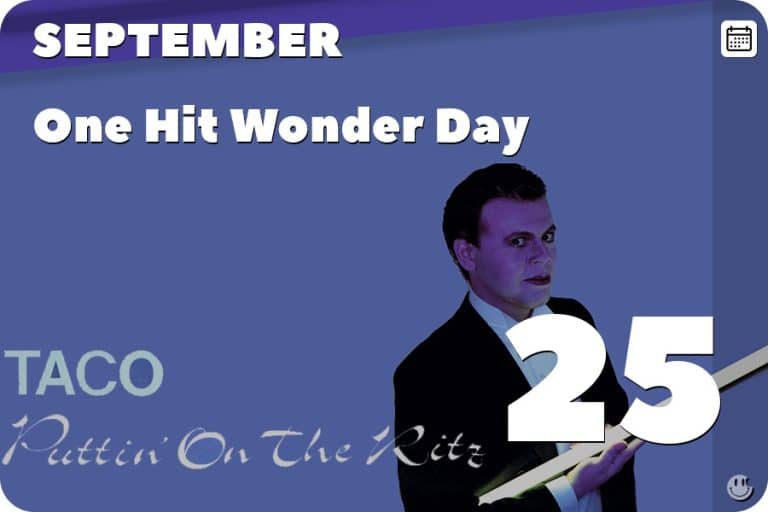
- Influential Songs: Happy Days Are Here Again by Benny Meroff and His Orchestra, and Puttin’ on the Ritz
- Must-See Movies: Whoopee!, Animal Crackers, All Quiet on the Western Front, Feet First, The King of Jazz, and The Shame of Mary Boyle
- Most Famous American: Henry Ford — whose $5-a-day wage had defined prosperity and whose empire now defined what prosperity’s collapse looked like
- Notable Book: The Little Engine That Could by Watty Piper — possibly the most Depression-appropriate children’s book ever published
- Women’s silk stockings: 89 cents; The New York Times: 2 cents; Gallon of gas: 10 cents; First-class stamp: 2 cents
- U.S. Life Expectancy: Males 58.1 years; Females 61.6 years
- The Biggest Movie Star: Clara Bow
- The Conversation: On April 18, 1930, the BBC announced “There is no news today” and played piano music instead. It remains the most honest broadcast in radio history.
Top Ten Baby Names of 1930
Girls: Mary, Betty, Dorothy, Helen, Margaret, Barbara, Patricia, Joan, Doris, Ruth
Boys: Robert, James, John, William, Richard, Charles, Donald, George, Joseph, Edward
The Stars
Josephine Baker, Joan Blondell, Clara Bow, Louise Brooks, Joan Crawford, Marion Davies, Dolores Del Rio, Marlene Dietrich, Greta Garbo, Jean Harlow, Myrna Loy, Barbara Stanwyck, Thelma Todd
The Quotes
“I know, but I had a better year.” — Babe Ruth, when told his $80,000 salary was more than President Hoover’s $75,000
“There is no news today.” — BBC Radio announcer, April 18, 1930, before playing piano music for the remainder of the broadcast
“I think I can. I think I can. I think I can.” — The Little Engine That Could, 1930 — accidentally the motto of the entire Depression decade
2nd and 3rd Academy Awards
The 2nd Academy Awards (April 3, 1930) honored 1928-1929 films. The Broadway Melody won Best Picture — the first sound film to win the top honor. The “Best Acting” award, rather than separate actor/actress categories, was still in use.
The 3rd Academy Awards (November 5, 1930) honored 1929-1930 films. All Quiet on the Western Front won Best Picture. The ceremony lasted 15 minutes — the shortest in Oscar history. Winners were announced in advance; there were no acceptance speeches.
Time Magazine Person of the Year
Mahatma Gandhi — for his leadership of the Salt March and the Indian independence movement, bringing international attention to nonviolent civil disobedience as a political force.
Miss America
No Miss America was crowned in 1930 — the pageant was suspended from 1928-1932 due to controversy.
We Lost in 1930
Arthur Conan Doyle, creator of Sherlock Holmes, died July 7 at the age of 71. He spent his final years devoted to spiritualism, attempting to communicate with the dead. His last words were reportedly to his wife: “You are wonderful.”
D.H. Lawrence, author of Lady Chatterley’s Lover, died on March 2, at the age of 44, from tuberculosis
William Howard Taft, 27th President of the United States and Chief Justice of the Supreme Court — died March 8, age 72; the only person to hold both offices
Robert Bridges, British Poet Laureate — died April 21, age 85
Lon Chaney, “The Man of a Thousand Faces,” a silent film actor, died August 26, age 47, from throat cancer
Tom Mix, the first great cowboy movie star, was still very much alive in 1930
America in 1930 — The Context
The Great Depression had begun with the stock market crash of October 1929. By 1930, it was clear this was no ordinary downturn. Banks were failing at the rate of several hundred per month. Farmers who could not make mortgage payments lost their land. Factories shut down. Workers who had been middle-class the previous year stood in breadlines.
The unemployment rate was 14.6% in 1930 and rising. By 1932, it would reach 25%. No unemployment insurance existed. No Social Security existed. When you lost your job, you lost everything — savings, home, dignity. The shantytowns that sprang up on the edges of cities were called Hoovervilles, after the president whom many blamed for the crisis.
And yet Americans went to the movies. Two out of every five Americans saw at least one film per week, even during the Depression’s worst years. Radio provided free entertainment in the home — by the early 1930s, most middle-class families owned one. The music was swing and jazz. The films were screwball comedies and musicals. The escape from reality was deliberate and necessary.
The 1930 that Americans experienced was a year of reckoning — the first full year of knowing that the prosperity of the 1920s was gone and the uncertainty of what would come next.
The Nazi Rise
On September 14, 1930, the Nazi Party received 18.3% of the German vote in federal elections, making it the second-largest party in the Reichstag. It had received only 2.6% in 1928. The global Depression was feeding extremism in Germany, as it was across Europe. Adolf Hitler was not yet in power — that came in 1933 — but the direction was becoming visible. Few democratic governments were paying adequate attention.
Pop Culture Facts and History
All Quiet on the Western Front — directed by Lewis Milestone from Erich Maria Remarque’s novel — was released on April 21, 1930. It depicted WWI from the perspective of German soldiers with unprecedented honesty and won the Best Picture Oscar. It was banned in Germany by the Nazi Party, which disrupted screenings, released mice in theaters, and threw stink bombs to prevent audiences from seeing it.
The first Looney Tunes cartoon, Sinkin’ in the Bathtub, was released in 1930. The name is “Tunes”, not “Toons”, because the series was created by Warner Bros. specifically to promote its music catalog. Looney Tunes was essentially the world’s first branded content strategy.
Betty Boop made her first appearance in the 1930 cartoon Dizzy Dishes — though she was initially more dog than human. She became fully human in 1932 and became one of the most iconic cartoon characters in American history, as well as one of the first overtly sexualized fictional characters in animation.
The first Mickey Mouse newspaper comic strip was published on January 13, 1930, drawn by Win Smith and Floyd Gottfredson under Walt Disney’s supervision. Mickey had appeared in animated films since 1928; the strip brought him to millions of newspaper readers.
Blondie debuted as a newspaper comic strip in 1930, created by Chic Young. It originally featured Blondie as a flapper and Dagwood as a wealthy playboy. When they married in 1933 — against his family’s wishes, which led to his being disinherited — the strip became a domestic comedy that ran until 2020, making it one of the longest-running comic strips in history.
The Shadow radio mystery program debuted in 1930. Its opening line — “Who knows what evil lurks in the hearts of men? The Shadow knows!” — became one of the most recognizable phrases in American radio history. Orson Welles voiced The Shadow in the late 1930s before directing Citizen Kane.
Scotch tape was invented by 3M engineer Richard Drew in 1930. Drew had previously invented masking tape in 1925. 3M stands for Minnesota Mining and Manufacturing Company. The tape was initially marketed to automobile body shops for two-tone paint jobs; office use followed.
The Hays Code — formally the Motion Picture Production Code — was established in 1930 under Will H. Hays, president of the Motion Picture Producers and Distributors of America. It imposed strict guidelines on depictions of sex, crime, religion, and violence in American films. It was largely ignored by studios throughout the early 1930s, then enforced stringently from 1934 to 1968, fundamentally shaping what American audiences were allowed to see on screen for three decades.
The first car radio — developed by Paul and Joseph Galvin and William Lear — was installed in a car in 1930. They called it a “Motorola,” a portmanteau of “motor” and “Victrola.” The name later became the company name. Lear would go on to design the Learjet.
KFC was founded by Harland David Sanders in Corbin, Kentucky in 1930, initially as a roadside gas station where Sanders also cooked chicken for travelers. He was not a colonel — the title was honorary, awarded by the Governor of Kentucky in 1950 in recognition of his contributions to the state’s cuisine.
Pluto was discovered on February 18, 1930, by 24-year-old astronomer Clyde Tombaugh at the Lowell Observatory in Flagstaff, Arizona. He had been comparing photographic plates of the sky and noticed a faint dot that had moved. The name was suggested by 11-year-old Venetia Burney of Oxford, England, who proposed it to her grandfather over breakfast. It was chosen from over 1,000 submitted suggestions. Pluto was demoted to a dwarf planet in 2006, an event that many people still take personally.
Twinkies were invented by James Dewar, a manager at the Continental Baking Company, in 1930. He originally called them “Twinkle Toes Cupcakes” after a shoe advertisement. The name was shortened to Twinkie. They were filled with banana cream until WWII rationing made bananas scarce, at which point vanilla cream was substituted. The vanilla filling has remained ever since.
Agatha Christie, G.K. Chesterton, and other British mystery writers founded the Detection Club in 1930. Members took an oath swearing never to use “Divine Revelation, Feminine Intuition, Mumbo Jumbo, Jiggery-Pokery, Coincidence, or Act of God” in their mystery plots. The club still exists and still administers the oath.
Sir Frank Whittle filed his jet engine patent in 1930, using a gas turbine to provide thrust. The British Air Ministry was uninterested. Germany flew the first jet-powered aircraft in 1939. Britain eventually flew its own in 1941, using Whittle’s design.
Scotch cellophane tape, Neoprene rubber, quick-frozen food, and the motorized car radio all appeared in 1930. Despite the Depression’s devastation, invention continued.
The Bank of Italy — founded in San Francisco in 1904 by Amadeo Giannini to serve working-class immigrants — was renamed Bank of America in 1930. It would go on to become the largest bank in the United States.
In 1930, the world record “longest-running laboratory experiment” began: pitch — a derivative of tar — was placed in a glass funnel to drip slowly. As of this writing, it has dripped only nine times in 90+ years. No one has ever actually witnessed a drop fall; each time it happens, the camera is not recording. This is an Australian problem, specifically.
Clarence Birdseye received his patent for quick-freezing food in 1930, founding the modern frozen food industry. He had developed the technique after observing how Native Canadians naturally preserved fish in extreme cold during the winter of 1912-1915.
In 1930, there were only 14 Shih Tzu dogs outside of China, due to the breed’s restricted export. Every Shih Tzu alive today is descended from those 14 dogs.
The American hamster population is descended from a single pregnant female captured in Syria in 1930 by zoologist Israel Aharoni. She was found with 11 pups in a burrow. Most escaped or were killed; three survived and bred. Every domestic hamster in the world descends from this family.
Bobby Jones won all four major golf championships in 1930 — the British Amateur, the British Open, the U.S. Open, and the U.S. Amateur — completing what was called the Grand Slam of golf. He then retired from competitive golf at age 28. No one has ever won all four majors in a single calendar year since. Jones is still considered by many the greatest amateur golfer in history.
Grant Wood completed American Gothic in 1930, his iconic painting of a farmer and woman standing in front of an Iowa farmhouse. It became one of the most recognized and parodied paintings in American history. The subjects were Wood’s dentist and his sister, not a married couple as commonly assumed.
A mysterious man visited Edgar Allan Poe’s grave in Baltimore on his birthday every year from 1930 through 1998, leaving three roses and a half-bottle of cognac. He was never identified. The tradition ended in 1998; another visitor briefly attempted to continue it afterward. No one knows who started it or why.
Elm Farm Ollie became the first cow to fly in a fixed-wing aircraft on February 18, 1930, and was milked mid-flight over St. Louis. The milk was sealed in paper containers and dropped by parachute to spectators below. Elm Farm Ollie was also known as “Bessie the Flying Cow.” This is all true.
George Stathakis attempted to go over Niagara Falls in a barrel in July 1930. He survived the fall but was trapped behind the water curtain for 18 hours and suffocated before rescue workers could reach him. His pet turtle — also inside the barrel — survived.
In 1919, Irish-born soldier Michael Keogh stopped an angry mob from killing two minor right-wing political organizers who were being beaten. In 1930, at a Nuremberg rally, he recognized one of the men he had saved. It was Adolf Hitler.
War Plan Red was a U.S. military contingency plan for war with Canada approved in 1930. It included plans for bombing Canadian railway lines and capturing Halifax. The plan was declassified in 1974. Canada has never formally responded.
The Habit
Going to the movies, even when you couldn’t afford the nickel admission. Going to the radio. Going dancing. Going anywhere that costs nothing and provides escape.
Christmas Gifts and Firsts of 1930
Scotch tape, Twinkies, the first car radio — all new in 1930. Christmas gifts in 1930 were modest out of necessity: homemade toys, simple games, and whatever the Sears catalog could offer at the lowest price.
Nobel Prize Winners
Physics — Sir Chandrasekhara Venkata Raman (for the Raman Effect, discovering light scattering) Chemistry — Hans Fischer (for his research into hemin and chlorophyll) Medicine — Karl Landsteiner (for his discovery of human blood groups, making safe blood transfusion possible) Literature — Sinclair Lewis (first American to win the Nobel Prize in Literature; his works include Main Street, Babbitt, and Elmer Gantry) Peace — Nathan Söderblom (Swedish Lutheran archbishop, for promoting Christian unity) Economics — Prize not yet established (first awarded 1969)
Sinclair Lewis was the first American to win the Nobel Prize in Literature. He had previously declined the Pulitzer Prize for Arrowsmith in 1926. He accepted the Nobel Prize.
Popular and Best-Selling Books of 1930
Angel Pavement — J.B. Priestley
Chances — A. Hamilton Gibbs
Cimarron — Edna Ferber
The Door — Mary Roberts Rinehart
Exile — Warwick Deeping
The Hidden Staircase (Nancy Drew #2) — Carolyn Keene
The Little Engine That Could — Watty Piper
Rogue Herries — Hugh Walpole
The Secret of the Old Clock (Nancy Drew #1) — Carolyn Keene
Twenty-Four Hours — Louis Bromfield
The Woman of Andros — Thornton
Wilder Years of Grace — Margaret Ayer Barnes
Young Man of Manhattan — Katharine Brush
The first two Nancy Drew mysteries were published in 1930, written under the pen name “Carolyn Keene” — actually a pseudonym used by multiple ghostwriters for the Stratemeyer Syndicate. The series has sold over 80 million copies. The author’s real identity was kept secret for decades.
Broadway in 1930
Girl Crazy opened October 14, 1930, introducing Ginger Rogers and featuring the Gershwin brothers’ music — including I Got Rhythm, performed by Ethel Merman in her Broadway debut. The song became one of the most performed jazz standards in history.
Best Film Oscar Winner
All Quiet on the Western Front, directed by Lewis Milestone, won Best Picture at the 3rd Academy Awards in 1930, presented for the 1929-1930 film year. It remains one of the greatest anti-war films ever made.
The Bomb
Movie: Hell’s Angels (Howard Hughes) — technically a triumph of aviation photography and a genuine spectacle, but its plot and dialogue were so weak that it was widely mocked despite the aerial sequences. Jean Harlow was added to the cast when the original female lead’s accent proved incompatible with the new sound technology. Radio: Any program that tried to make the Depression seem cheerful. Americans knew better.
Top Movies of 1930
- All Quiet on the Western Front
- Animal Crackers
- The Big House
- Whoopee!
- Min and Bill
- The Divorcee
- Hell’s Angels
- The King of Jazz
- Morocco
- Feet First
Most Popular Radio Shows of 1930
- Amos ‘n’ Andy (NBC) (so popular that movie theaters broadcast it over loudspeakers during its airtime so audiences wouldn’t miss it)
- The Jack Benny Program (NBC)
- Rudy Vallée and His Connecticut Yankees (NBC)
- The Shadow (CBS — debut year)*
- The Lucky Strike Dance Orchestra (NBC)
- The Eveready Hour (NBC)
- Lux Radio Theatre (CBS)
- The Palmolive Hour (NBC)
- The Maxwell House Concert (NBC)
- National Farm and Home Hour (NBC)
Biggest Pop Artists of 1930
Arden-Ohman Orchestra, Earl Burtnett and His Los Angeles Biltmore Hotel Orchestra, Duke Ellington, Libby Holman, Isham Jones and His Orchestra, Wayne King and His Orchestra, Ted Lewis and His Band, Guy Lombardo and His Royal Canadians, Red Nichols and His Five Pennies, Harry Richman, Leo Reisman Orchestra, Jacques Renard and His Orchestra, Nat Shilkret and the Victor Orchestra, Rudy Vallée and His Connecticut Yankees, Ted Weems and His Orchestra, Paul Whiteman and His Orchestra
1930 Billboard Number One Songs
December 26, 1929 – January 10, 1930: Great Day — Paul Whiteman
January 11 – January 31: Chant of the Jungle — Roy Ingraham
February 1 – February 7: The Man from the South — Ted Weems
February 8 – February 28: Happy Days Are Here Again — Benny Meroff
March 1 – March 7: Puttin’ on the Ritz — Harry Richman
March 8 – March 21: Happy Days Are Here Again — Ben Selvin (returned to #1)
March 22 – May 30: Stein Song (University of Maine) — Rudy Vallée (10 weeks)
May 31 – June 13: When It’s Springtime in the Rockies — Hilo Hawaiian Orchestra
June 14 – July 4: When It’s Springtime in the Rockies — Ben Selvin (returned to #1)
July 5 – August 22: Dancing with Tears in My Eyes — Nat Shilkret
August 23 – September 19: Little White Lies — Fred Waring’s Pennsylvanians
September 20 – October 17: If I Could Be with You One Hour Tonight — McKinney’s Cotton Pickers
October 18 – November 28: Body and Soul — Paul Whiteman
November 29 – December 19: Three Little Words — Duke Ellington
December 30, 1930 – January 16, 1931: You’re Driving Me Crazy (What Did I Do?) — Guy Lombardo
Happy Days Are Here Again — written in 1929 and recorded by multiple artists — became the de facto anthem of the early Depression. The irony was not lost on anyone. Franklin Roosevelt later adopted it as his campaign song in 1932, and it has been associated with the Democratic Party ever since.
1930 United States Census
Total U.S. Population: 123,202,624
New York, NY — 6,930,446
Chicago, IL — 3,376,438
Philadelphia, PA — 1,950,961
Detroit, MI — 1,568,662
Los Angeles, CA — 1,238,048
Cleveland, OH — 900,429
St. Louis, MO — 821,960
Baltimore, MD — 804,874
Boston, MA — 781,188
Pittsburgh, PA — 669,817
Sports Champions of 1930
World Series: Philadelphia Athletics
NFL Champions: Green Bay Packers
Stanley Cup: Montreal Canadiens
U.S. Open Golf: Bobby Jones (part of his historic Grand Slam — winning all four major championships in 1930)
U.S. Open Tennis — Men: John Doeg | Women: Betty Nuthall
Wimbledon — Men: Bill Tilden | Women: Helen Moody
NCAA Football: Alabama and Notre Dame (shared)
Kentucky Derby: Gallant Fox (Triple Crown winner)
Boston Marathon: Clarence DeMar — 2:34:48
FIFA World Cup: Uruguay (defeated Argentina 4-2 in the final — the first World Cup ever held)
Sports Highlight: Bobby Jones won all four major golf championships in 1930 — the British Amateur, British Open, U.S. Open, and U.S. Amateur — achieving what was called the Grand Slam of golf. He then retired from competitive golf at age 28, having never lost a professional tournament. No golfer has matched this achievement. Gallant Fox won horse racing’s Triple Crown in 1930, trained by Sunny Jim Fitzsimmons. It was only the second Triple Crown in history.
FAQs: 1930 History, Facts, and Trivia
Q: What was the Great Depression like in 1930?
A: By 1930, unemployment had reached 14.6% and was rising sharply. Banks were failing weekly, taking depositors’ savings with them. Farmers lost land when they couldn’t make mortgage payments. Families doubled up in relatives’ homes or lost them entirely. Hoovervilles — shantytowns named in bitter irony after President Hoover — appeared on the edges of cities. There was no unemployment insurance and no Social Security. The safety net was family, charity, and luck.
Q: What famous comic-strip and cartoon characters debuted in 1930?
A: Betty Boop appeared in her first cartoon, Dizzy Dishes, in 1930. The first Looney Tunes cartoon, Sinkin’ in the Bathtub, was released the same year. The Blondie comic strip launched in 1930. The first Mickey Mouse newspaper comic strip was published on January 13.
Q: What useful invention was created in 1930?
A: Scotch tape, the car radio (Motorola), and Twinkies all debuted in 1930. Clarence Birdseye received his patent for quick-frozen food. Frank Whittle filed his jet engine patent. Despite the Depression, invention did not stop.
Q: Who discovered Pluto in 1930?
A: Clyde Tombaugh, a 24-year-old astronomer at the Lowell Observatory in Arizona, discovered Pluto on February 18, 1930, by comparing photographic plates of the sky and noticing a faint dot that had moved. An 11-year-old English girl named Venetia Burney suggested the name.
Q: What was the first FIFA World Cup?
A: The first World Cup was held in Uruguay in July 1930. Uruguay defeated Argentina 4-2 in the final and won the inaugural title on home soil. Only 13 nations participated; most European countries declined to make the long sea voyage.
Q: What great golf achievement happened in 1930?
A: Bobby Jones won all four major golf championships in 1930 — the British Amateur, British Open, U.S. Open, and U.S. Amateur — achieving the Grand Slam. He then retired from competitive golf at age 28. No one has matched it.
Q: What was the Hays Code?
A: The Motion Picture Production Code, administered by Will H. Hays, was established in 1930 to impose guidelines on what could be depicted in American films, restricting portrayals of sex, crime, and religion. Initially largely ignored by studios, it was enforced strictly from 1934 to 1968, defining what three generations of Americans were permitted to see on screen.
Q: What famous mystery writing club was founded in 1930?
A: The Detection Club, founded by Agatha Christie, G.K. Chesterton, and other British mystery writers. Members swore an oath never to use Divine Revelation, Feminine Intuition, Mumbo Jumbo, or Coincidence in their plots. The club still exists and still administers the oath.
Q: What candy was invented in 1930?
A: Twinkies were invented by James Dewar in 1930. They were originally filled with banana cream; wartime sugar rationing in WWII led to the substitution of vanilla cream, which has remained ever since.
Q: Who was the first American to win the Nobel Prize in Literature?
A: Sinclair Lewis, awarded the Nobel Prize in Literature in 1930 for novels including Main Street, Babbitt, and Elmer Gantry. He had previously declined the 1926 Pulitzer Prize for Arrowsmith.
More 1930 History and Trivia Resources
Most Popular Baby Names (BabyCenter.com)
Popular and Notable Books (popculture.us)
Broadway Shows that Opened in 1930
1930 Calendar, courtesy of Time and Date.com
The Great Depression LIB
Fact Monster
1930s, Infoplease.com World History
1930 in Movies (according to IMDB)
Retrowaste Vintage Culture
1920s Slang
1930 US Census Fast Facts
Wikipedia 1930