
Geese in Delaware: Local Honkers and Hangouts
Delaware is more than tax-free shopping and scrapple—it’s also home to thousands of geese, especially the well-known Canada goose, a familiar sight in neighborhoods, parks, and farm fields across the state. Depending on the season, these large waterfowl have made Delaware part of their year-round or migratory home.
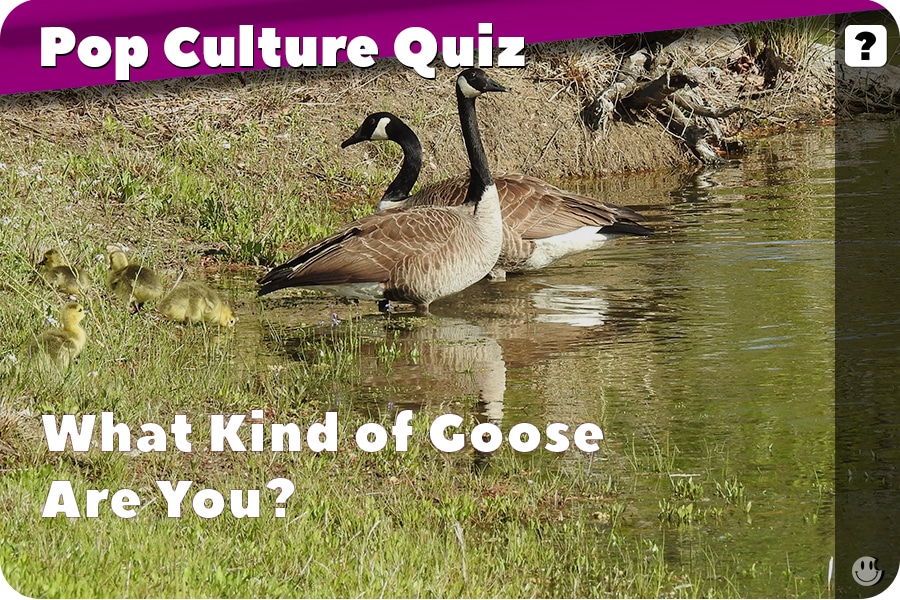
(PCM’s What Kind Of Goose Are You? Quiz)
Goose Behavior and Biology: Summary
Geese are intelligent, highly social birds known for their loyalty, advanced communication skills, and excellent vision. They form strong family bonds, often mating for life, and can identify individuals in their flocks, including distinguishing siblings from an early age.
Their vision is awe-inspiring—geese can detect ultraviolet light and see greater detail at long distances than humans. They also exhibit unihemispheric slow-wave sleep, allowing them to stay alert to predators with one eye open.
Geese use their sensitive bills, which are rich in touch receptors, to forage and develop food preferences early in life. From the moment they hatch—and even before—goslings begin communicating with their parents and reacting to environmental cues like plant smells.
In flight, geese use energy-saving V-formations, taking turns leading and using environmental cues and the Earth’s magnetic field for migration. Their protective instincts extend to mourning lost mates or eggs, and due to their heightened awareness, they’ve even been used for guard duty.
???? Where Do Geese Live in Delaware?
Geese aren’t too picky. In Delaware, you’ll find them:
In suburban communities like Newark, Middletown, and Dover, people often waddle across golf courses or stroll near stormwater retention ponds.
Around shopping centers and office parks, especially those with decorative ponds (which geese take as an open invitation).
At state parks like:
Lums Pond State Park – A favorite for both boating and birdwatching.
Trap Pond State Park – Offers prime nesting areas in its swampy cypress habitat.
Killens Pond State Park – Another hotspot for seasonal goose activity.
Bombay Hook National Wildlife Refuge – One of the East Coast’s top destinations for migratory birds, including thousands of geese in fall and winter.
???? https://www.fws.gov/refuge/bombay-hook
Geese especially love open grassy areas near water, which are plentiful across Delaware’s low-lying landscape.
???? When Do Geese Migrate Through Delaware?
Delaware is a significant stop on the Atlantic Flyway, a key migration route for geese traveling between Canada and the southern U.S. While some geese remain in Delaware year-round, fall (October–December) and spring (February–April) bring noticeable spikes in the population as massive flocks pass through.
Resident geese can be spotted any time of year.
Migratory flocks arrive larger during the colder months and return north by early spring.
???? Geese in the Neighborhood
Some Delawareans have a love-hate relationship with these birds. While they’re charming to watch, geese can:
Leave droppings on sidewalks and lawns
Hiss or act territorially during nesting season (usually late March to May)
Occasionally block traffic while crossing roads in their famous single-file parade
However, they’re protected under the Migratory Bird Treaty Act, so it’s illegal to harm or harass them without a federal permit. That said, many towns use humane deterrents—like coyote decoys or trained dogs—to keep flocks moving along peacefully.
???? Why Geese Walk in a Straight Line:
Safety & Protection
The line formation allows goslings (the baby geese) to stay close to their parents, especially the mother in front and the father guarding the rear. This reduces the risk of predators sneaking up on stragglers.Energy Conservation
Just like their V-formation in flight, walking in a line helps reduce drag and makes it easier for the goslings to follow without wasting extra energy.Visual Imprinting & Learning
Goslings imprint on their parent(s) and follow them instinctively. A straight line is just the most direct and visible way to stay on course behind mom or dad. It’s also helpful when learning to forage or find water.Narrow Path Adaptation
It looks very organized on sidewalks, paths, or roads, but that’s not to impress humans—geese instinctively take the most direct route that fits the group. They will also walk this way on open fields or frozen lakes.
So, Is It an Adjustment for Humans?
Nope. But their path might get straighter when crossing roads or sidewalks because the terrain funnels them — think of it as instinct meets infrastructure.
So the next time you see a goose conga line crossing a parking lot like royalty, know: it’s ancient bird logic, not human influence.
???? Did You Know?
Delaware hosts part of the Mid-Atlantic Population of Canada geese, distinct from migratory giants from the Arctic. These local birds are Delaware-born and honk-raised—some right in the heart of Wilmington or Rehoboth Beach business parks.
Want to see thousands of geese at once? Head to Bombay Hook NWR or Prime Hook National Wildlife Refuge during peak migration. Bring binoculars, and maybe some earplugs—the honking gets real.
???? Top 25 Goose Facts (With Verified Accuracy)
Geese can see ultraviolet (UV) light, which helps them detect patterns and predators invisible to human eyes.
???? Cornell Lab of OrnithologyThey can sleep with one eye open, using only half of their brain at a time—a survival adaptation.
???? National Institutes of HealthGeese can control each eye independently, giving them nearly 360° vision.
They communicate with their parents while still in the egg, a behavior called “embryonic vocalization.”
???? Audubon SocietyGoslings imprint on the first moving thing they see, a human or even an object.
???? BBC EarthThey can recognize individual flock members by appearance and voice.
Geese show empathy, with increased heart rates when a partner is in conflict.
???? Scientific AmericanTheir bills contain touch-sensitive structures, similar to fingertips, used for food exploration.
Young geese react to plant odors, showing early food preferences based on smell.
Geese can follow the gaze of others, indicating social awareness and shared attention.
Mated geese are monogamous, often forming lifelong bonds.
They express mourning behaviors when they lose a mate or offspring.
In flight, they use a V-formation for aerodynamic efficiency, up to 71% energy savings.
???? USGSGeese take turns leading during migration to reduce fatigue among the group.
They use landmarks, the sun, and magnetic fields to navigate, demonstrating complex spatial memory.
???? National GeographicGeese have a long lifespan, sometimes exceeding 20 years in the wild.
???? Canadian Wildlife FederationThey’re excellent swimmers, with goslings able to dive underwater within 24 hours of hatching.
Their nests get “home improvements” with twigs, bark, and leaves added throughout the season.
Geese are fiercely protective, hissing and charging when threatened.
Groups have distinct names: a gaggle on land or water, and a skein in flight.
Male geese are called ganders, while females are simply geese.
They are omnivores, consuming grass, seeds, berries, and small insects.
Geese can be trained as guards, once used in Brazil’s prisons and by Roman armies.
???? Smithsonian MagazineThey get along well with other animals, primarily when raised around them.
Geese are among the largest waterfowl, second only to swans in size.